

monk teachings : ค้นหาหนังสือธรรมะ หน้า 5 / 12
หน้าหนังสือทั้งหมด

140
Making the Five Precepts Easy for Children to Understand
12345
Chapter 33
Making the Five Precepts Easy
for Children to Understand
Once, I had the chance to observe a senior monk simplify
the Five Precepts for the children. The writer was impressed
with the
In this chapter, a senior monk teaches the Five Precepts in a simple manner suitable for children. The intention is to provide a guideline for parents to help their children understand these important
157
The Value of Life and Care for Aging Parents
His mind will be unmoved by worldly sufferings. He will also
be able to find happiness both in this life and the next."
All of these teachings given by a respected senior monk
remind us that we should
ข้อความจากพระอาจารย์ที่เคารพสอนให้เราพิจารณาชีวิตให้มีค่าผ่านการทำความดีและการดูแลผู้ปกครองในชีวิตสุดท้าย ความสำคัญของการอยู่ด้วยใจที่ไม่หวั่นไหวต่อความทุกข์และการเตรียมตัวเข้าถึงนิพพาน ผ่านเรื่องราวข
23
An Ancient Secret for the New Millennium
An Ancient Secret for the New Millennium
LUANG PU WAT PAKNAM
and the Return of the
Dhammakaya
The Great Masters of meditation have told us
that the knowledge of meditation practice along
the Middle Wa
This text discusses how meditation knowledge was lost after Buddha's passing and its rediscovery by Luang Pu Wat Paknam in 1916. At 33, after 11 years as a monk, he sought to regain the ancient wisdom

1
Tomorrow The World Will Change
Luang Phaw Dhammajayo was born in Singburi Province, Thailand in 1944. Backed with deep interests in Buddhism and meditation, he was ordained as a Buddhist monk at the age of 25 at Wat Paknam Bhasicha
Luang Phaw Dhammajayo, a prominent Buddhist monk from Thailand, advocates for world peace through inner peace and meditation. He emphasizes that true happiness is attainable and essential for achievin

140
Making the Five Precepts Easy for Children to Understand
Chapter 33
**Making the Five Precepts Easy for Children to Understand**
Once, I had the chance to observe a senior monk simplify the Five Precepts for the children. The writer was impressed with
In this chapter, a senior monk demonstrates how to simplify the Five Precepts for children. The focus is on making these fundamental teachings understandable through engaging dialogue. The Five Precep
174
Preparing for a Blessed Life: Insights from a Senior Monk
"for example, if we are certain of our integrity regarding our generosity, we can bless a person in this way:
*With the truth of the alms I have offered to the monks all year long, may you have abunda
In this text, a senior monk shares insights on the importance of generosity and the practice of giving blessings. He emphasizes that those preparing for life's final chapter should cultivate good deed

5
Meditation and Enlightenment
There is no visible textual content in the image to extract with OCR. The image depicts a serene scene of a monk or spiritual teacher sitting cross-legged in front of a decorated figure that appears t
This image captures a moment of tranquility where a monk shares wisdom in front of a decorated figure resembling the Buddha. Several monks-in-training absorb the teachings, reflecting the essence of s

95
Stories of Enlightenment and Wisdom
The Story of Prince Abhaya
The Story of Monk Sammunithera
The Story of Monk Anulamitra
The Story of Venerable Gela
The Story of Thirty Gela
The Story of Cinnamana Vyasa
The Story of Ananda
The Story o
This compilation presents various stories, including the profound narratives of Prince Abhaya, Monk Sammunithera, and the key teachings of the Buddha related to temptation and enlightenment. Each stor
181
Understanding Internal and External Fools in Buddhism
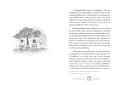
1) External Fools include non-Buddhists. They are
determined to demolish Buddhism, whether they are of other
religious affiliations or not. They typically try to cast aspersions
upon Buddhist monks. W
The text discusses two types of fools in Buddhism: External Fools, who are non-Buddhists aiming to undermine the faith by misrepresenting its teachings, and Internal Fools, who are Buddhists lacking r
7
Understanding the Mind in Thai Culture
"this or that", "black or white", with no gray area, as the
locals find this logic easy to grasp and put into practice. In
addition, Thai culture and language has a relatively large
amount of words an
This text discusses the simplicity of dualistic thinking in Thai culture and the rich linguistic resources that explain human cognition. It emphasizes that terms often linked to Buddhism should be tre
10
Overcoming Kilesa: A Buddhist Perspective
learn how to improve and "win" the internal battle against
our own kilesa. Although people generally recognize the fact
that they acquire bad habits throughout their lives, they may
not recognize that
This book explores the concept of kilesa, or our negative tendencies and habits, through a Buddhist lens. It emphasizes the importance of acknowledging our imperfections and understanding that the acc
121
Truth for the Family: Lessons from the Buddha
Part Five: Truth for the Family
2. Ideally, he/she should be extremely intelligent,
exceptionally virtuous, exceedingly knowledgeable
of the truths about life (be enlightened), and all
his knowledge m
In this passage, we delve into the qualities of an ideal mentor and the essence of the Buddha's teachings. The ideal mentor is someone who is not only intelligent and virtuous but also knowledgeable f
2
Message from The Most Ven. Phrarajabhavanavisudh - World Peace Ethics Contest 2007
Message from The Most Ven. Phrarajabhavanavisudh
On occasion of the Examination Day for the World Peace Ethics Contest 2007
Greetings to all contestants of the World Peace Ethics Contest 2007,
The
In a heartfelt message for the World Peace Ethics Contest 2007, The Most Ven. Phrarajabhavanavisudh encourages contestants to embrace the universal truths of the Buddha's teachings. He highlights the
181
Understanding External and Internal Fools in Buddhism
1) External Fools include non-Buddhists. They are determined to demolish Buddhism, whether they are of other religious affiliations or not. They typically try to cast aspersions upon Buddhist monks. W
In Buddhism, External Fools are non-Buddhists who seek to distort and undermine Buddhist teachings, casting aspersions on monks and creating confusion. Internal Fools, on the other hand, are Buddhists
38
Understanding the Concept of Dhammakāya in Buddhist Thought
D.III.84
Vāsettha and Bhāradvāja, he whose confidence in the
Tathāgata is settled, rooted, established, solid, irremovable by
any ascetic or brahmin, any deva or Māra or Brahmā or anyone
in the world
In this passage, Vāsettha and Bhāradvāja discuss the unwavering confidence in the Tathāgata, stating that those deeply rooted in dhamma can claim to be heirs of dhamma. The term 'dhammakāya' and its i
80
Understanding Dhammakāya and its Significance in Buddhism
mental qualities128 or purity,129 or identifies it with realities to be
attained or experienced spiritually by noble disciples through the
penetration of the noble paths.130 In one instance, he connec
This text examines the term dhammakāya as articulated by Buddhaghosa, linking it to spiritual realities and teachings of the Buddha. It highlights the role of dhamma-vinaya as a guiding principle and
129
Exploring the Center of the Body in Meditation
Thus, the phrase 『息中具有四大。心在中』 can be interpreted as: "the mind should be located at the centre of the body while breathing (in and out)." The precise position of the centre of the body where the mind
This text examines the phrase 'the mind should be located at the center of the body while breathing in and out.' It references the teachings of PhraMongkolthepmuni regarding the center's location abov
71
Growth of Dhammakaya Foundation's Global Influence
ROM QUALITY GREW QUANTITY
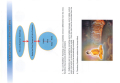
The reputation for training offered by the Dhammakaya Foundation has spread primarily by word of mouth, increasing the popularity of activities held, as the years pass by. P
The Dhammakaya Foundation's dedication to meditation training has led to a significant reputation, expanding through word of mouth and enhancing lives. Local branches in Thailand and abroad facilitate
15
The Lord Buddha's Teachings
The Lord Buddha's Teachings
The Lord Buddha's Teachings
Solve the Root Causes of Life's Problems
Habits, Mind, Body, Word
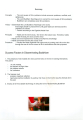
1. The Lord Buddha's Teachings aim to completely remove defilements from the
The Lord Buddha's Teachings focus on eliminating defilements from the mind to resolve all problems in life. By mastering one's habits, which govern both the body and mind, individuals can achieve cont
28
Understanding the Root Causes of Life's Problems through Buddhism
Summary
Concepts - The root causes of life's problems include economic problems, conflicts, and defilements
- The Lord Buddha's Teachings aim to correct the root causes of life's problems
- Buddhism c
This text discusses the root causes of life's problems, including economic issues, conflicts, and mental defilements, proposing that the Teachings of the Lord Buddha offer comprehensive solutions. By